
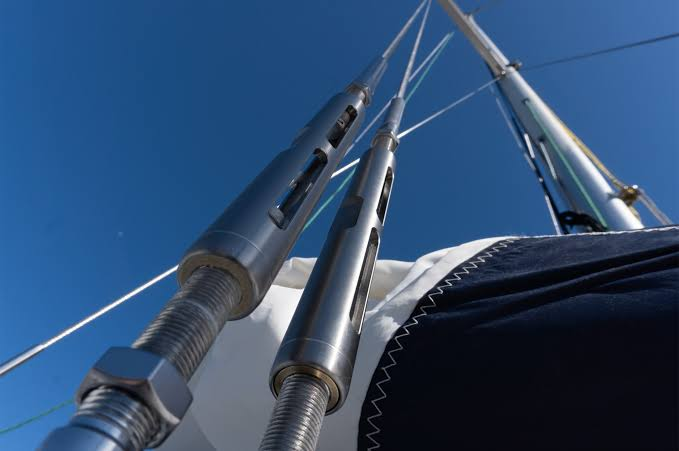
A failed shackle at sea rarely gives a warning. One moment the sail trims perfectly, and the next the rig is in the water. Most failures trace back to small, overlooked parts. Owners who choose boat rigging hardware au sailors rely on, and inspect it on a schedule, avoid most of these emergencies. This guide walks through the rigging safety checks every yacht and marine vessel needs. It also shows how the right stainless components make each inspection easier and each repair longer lasting.
Why Boat Rigging Hardware AU Owners Inspect Before Every Season
Saltwater attacks every metal part aboard. Add UV exposure, vibration, and constant load cycling, and even strong components lose strength over time. Fatigue cracks start inside terminals and pins where nobody can see them. That is why experienced skippers inspect their rigging before every season and again after heavy weather.
A methodical check costs a few hours. A dismasting costs thousands of dollars and can injure the crew. Choosing 316 marine-grade boat fittings from the start slows corrosion and makes inspection results far easier to read.
Warning Signs That Demand Action
Small symptoms deserve attention. Rusty colored streaks, fine cracks, and stiff parts at a joint are the symptoms of some problem with the material. Brown staining beneath a fitting usually signals crevice corrosion. Galling on threads shows poor lubrication or mismatched metals. Stretched holes in tangs or chainplates mean the part took repeated overloads.
When you find any of these signs, replace the part. Hoping it lasts another season is a gamble no crew should take.
Why Material Grade Decides Rigging Life
Grade 304 stainless works well ashore, but it struggles in chloride-rich water. Grade 316 contains molybdenum, which resists pitting and crevice attack far better. For that reason, 316 marine grade boat fittings remain the standard for shackles, turnbuckles, and deck hardware on coastal and offshore vessels.
The same logic applies to fasteners. Marine grade bolts and nuts in 316 stainless steel hold their strength and thread condition, while ordinary hardware-store steel can rust within months. Mixing metals invites galvanic corrosion, so match your fittings to your fasteners. Reliable boat rigging hardware au owners buy should always carry clear grade markings and proper certification.
Solutions for Common Rigging Problems
Most rigging problems have simple fixes when you catch them early.
- Worn fasteners: Replace them with fresh marine grade bolts and nuts, washers and locking nuts included. Old ones just aren’t worth the risk.
- Aging wire: Replace standing rigging every 10 to 15 years, and sooner for offshore or heavily loaded boats.
- Failed parts: Swap them for matching boat rigging hardware au professionals recommend, and log the date. Miami Stainless can help you match sizes and working loads.
Choosing a Supplier You Can Trust
Sourcing matters as much as inspection. A cheap fitting with unclear metallurgy defeats the purpose of every check above. Miami Stainless supplies marine stainless products to boaters, riggers, and boatbuilders across Australia, and the team understands what coastal conditions do to metal.
Browse the range of boat rigging hardware au sailors need, from shackles and turnbuckles to eye bolts and chainplate components. Each item suits harsh saltwater use. Their 316 marine grade boat fittings fit everything from weekend dinghies to offshore yachts. Miami Stainless staff can also answer technical questions about load ratings, compatibility, and corrosion protection before you buy.
Conclusion
Rigging safety is a matter of doing regular checks, acting quickly and getting good quality parts. Inspect standing and running rigging, shackles, turnbuckles, chainplates, and fasteners before every season, and keep a written log of what you find. Replace worn items right away with 316 marine grade boat fittings and matching Marine grade bolts and nuts. Whether you are refitting a yacht or maintaining a working vessel, dependable boat rigging hardware au suppliers carry keeps your crew safe and your vessel sailing longer.
Ready to upgrade your rig? Contact Miami Stainless today, explore the full marine range, and request your quote now.
FAQ’s
1. How often should I inspect my boat’s rigging?
In general, the recommended intervals for checking your boat’s rigging would be before every season, after a storm, and every month if the boat is used intensively.
2. When should standing rigging be replaced?
Generally, the owners’ consensus is that the standing rigging is replaced after 10 to 15 years. However, the boats that are used offshore and under heavy loads usually require much earlier replacement.
3. Is 316 stainless steel better than 304 for boats?
In a saltwater environment, 316 stainless steel is better in many ways. In addition to its resistance to general corrosion, its high molybdenum content makes it highly resistant to corrosion pitting and crevice corrosion.
4. Can I reuse old fasteners on my rig?
Do not do such a thing. New fastening equipment clamps down without any problem and does not get you involved in the possibility of some old fatigue issues still hidden.
5. What causes tea staining on stainless fittings?
It happens due to the reaction of the surface and the formation of rust from the contaminants or if the passivation step was not done properly. Tea coloration of the metal mostly has no consequence on the structural integrity but may indicate crevice or pitting corrosion beneath the surface.