
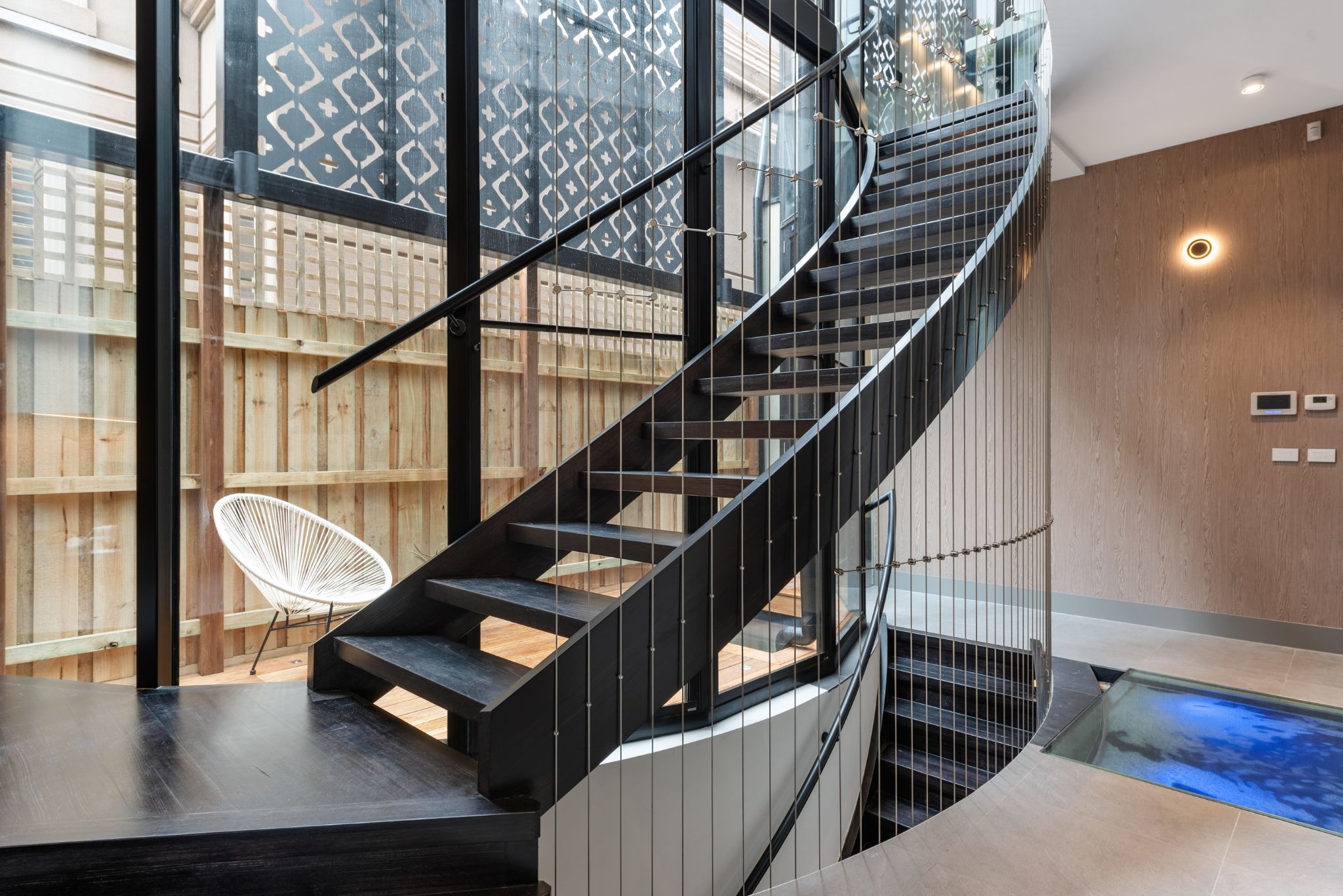
Making a mistake in quoting wire balustrade systems will cost you not only financially but also your compliance and scheduling issues. So, whether you are a homeowner who is simply building a new deck, a builder who is pricing a coastal project, or an architect who is specifying a commercial installation, upfront accurate cost estimation clearly divides a smooth build and a blown budget.
The problem is there are many moving parts, i.e., posts, wire rope, terminals, tensioners, and compliance requirements that vary by state and application. Miami Stainless eliminates the guesswork with a complete range of wire balustrade system supplies and expert guidance for Australian projects of every scale.
Why Wire Balustrade Costing Matters for Australian Builders and Homeowners
Outdoor structures, physical and weather conditions in Australia greatly influence your materials selection and costing of the project. The National Construction Code (NCC) 2026 provides minimum standards concerning balustrade height, wire spacing and structural load capacity. Non-compliant works lead to failed inspections, costly rectifications and liability risks.
Moreover, in very harsh coastal and marine environments such as Queensland’s Sunshine Coast or Sydney’s Northern Beaches ever-changing conditions (salt air, UV exposure, humidity) cannot so easily be withstood by materials. 316 marine-grade stainless steel wire rope is therefore non-negotiable as a minimum standard, it’s not considered an upgrade.
It won’t be long before you experience inspection and at that time what you install may be inspected.
Key Cost Factors for Wire Balustrade Systems in Australia
What Determines the Cost of Your Wire Balustrade System?
Multiple factors impact the final cost of your project:
Linear metres of run — Your overall perimeter length is the major factor here. The longer the run, the more wire, posts and fittings you will need.
Post type and spacing — Balustrade posts in 316 stainless steel can be spaced anywhere between 900mm and 1,500mm apart. With closer post spacing comes increased rigidity and reduction in wire sag but also greater number of posts and cost. Post shapes vary from simple base plate to architectural round or square profiles.
Wire rope specification — For Australian residential decks and commercial balustrades, the most commonly used wire rope is 3.2mm in diameter and made of 316 stainless steel. More heavy-duty applications may require the use of 4mm or 5mm wire. Each wire will usually cost somewhere between $8 and $25 per linear metre depending on diameter and grade.
Terminal and tensioning hardware — Using swageless terminals is a great way to make a wire installation that is both DIY and professional friendly. No swage wire balustrade systems use hand-tightened swageless terminals that do not require a hydraulic swage press or wire rope swaging tool, making them faster to install and easier to tension on-site.
Corner and end conditions — Corner fittings or corner posts angled correctly are required for corners. Ends of structural components need correctly specified end fittings or stainless steel handrail end caps. These small details are hardly ever priced correctly in rough quotations.
Handrail specification — In most cases, systems carried out in accordance with regulations will require the provision of a top rail. Stainless steel handrails will add to materials and labor cost but they greatly improve the appearance of the installation.
Practical Considerations: What Estimators Commonly Miss
Wire count per bay — According to Australian Standards, horizontal wire spacing should be such that a 100mm sphere cannot pass through. For a typical 1,000mm high balustrade, this will mean between 9 and 11 wire runs per bay. Each wire run requires two terminals per span.
NCC and council setbacks — There are extra provisions to comply with the correct type and operation of gates, fencing and balustrades around pools that are found in Australian Standards AS 1926.1. Wire spacing, hardware to the gate, and post height requirements differ from standard deck balustrades. Always check local council requirements before finalising your specification.
Wire tensioning allowance — Tensioning balustrade wire is a maintenance issue that should not be ignored. Under load and temperature changes, wire rope is capable of elongating slightly. By specifying adjustable swageless terminals you can easily re-tension the wire over time without having to replace parts.
Corrosion resistance for coastal sites — On a coastline installation, make sure that your 316 stainless steel specification runs through every component. Combining different grades will only mean accelerated galvanic corrosion. By the same token, the fasteners you use should also be stainless steel ones – Miami Stainless has them all over Australia in the same 316 grade.
Common Estimation Mistakes
Most estimators fail to accommodate the number of wire runs necessary.
Also, forgetting to factor in the balustrade wire tensioning hardware is yet another common mistake. Each wire end needs a fitting. Account for both ends of every run across every span.
Lastly, failure to consider waste and cut lengths on complex layouts can really add up.
Best Solutions Using Miami Stainless Wire Balustrade Products
Recommended Products for Australian Projects
Miami Stainless is your one-stop shop for building a compliant and professional wire balustrade system in Australia:
Swageless wire balustrade systems — This is the fastest terminal system to install for DIY and trade alike. No swage press required. Just thread, tighten, and tension.
Pre swaged wire balustrade assemblies — These factory-swaged assemblies come ready to go at the exact lengths that you need for your project. They are a great time-saving tool and a cleaner finish is achieved with these assemblies. Mainly used by commercial contractors and those who build decks under time constraints.
316 stainless steel wire rope — Miami Stainless can supply 3.2mm, 4mm, and 5mm diameter wire ropes. Different lengths are available in metres or rolls to suit the size of a project.
Stainless steel posts and balustrade posts — These are available in 316 grade and have round and square post. Usually, they can be placed on a range of footings such as concrete, timber decking, and steel structures.
Stainless steel handrails and handrail fittings — including adjustable handrail joiners and stainless handrail end caps for clean, code-compliant terminations.
To see your choices, visit Miami Stainless wire balustrade product category. You can also download specifications from the catalogue and resources section.
Installation Benefits of Choosing Miami Stainless
All components from Miami Stainless are specially made to last in the Australian environment. The 316 marine-grade stainless steel has high corrosion resistance as compared to other materials that would get corroded within a few seasons under the harsh conditions of coastal, poolside, and high-UV exposure.
The swageless wire balustrade system (eg:rapidlock systems) is especially good as it requires very little specialised equipment and can be installed on-site without any major difficulty. Also, since no factory lead times are involved for custom swaging, lower labour costs have resulted and faster project completion is possible too.
Miami Stainless always offers technical support to help builders and specifiers get the job done accurately for different project types. The comprehensive guide to wire balustrade systems includes installation, compliance, and component selection information.
Get Your Wire Balustrade Quote Sorted Today
Don’t keep convincing yourself if your material list is the perfect one. Miami Stainless is working with homeowners, deck builders, architects, and commercial contractors all over Australia every day — so we are sure how a compliant and high-quality wire balustrade system should be like.
You can shop the whole wire balustrade product line, ask for a product quote, or directly call our team for specification support. We will guide you to get just the right products in the right quantities.
Explore wire balustrade systems →
Frequently Asked Questions
How much does a wire balustrade system cost per linear metre in Australia?
Wire balustrade system costs typically range from $150 to $400+ per linear metre installed, depending on post specification, wire diameter, terminal type, and whether a stainless steel handrail is included. DIY supply-only costs are significantly lower. Contact Miami Stainless for a detailed material quote tailored to your project.
How many wire runs do I need to meet Australian building regulations?
Under the NCC and relevant Australian Standards, balustrade infill must not allow a 100mm sphere to pass through. For a standard 1,000mm high balustrade, this typically requires 9 to 11 horizontal wire runs. The exact number depends on wire diameter and the spacing between each run.
What is the difference between swageless terminals and pre-swaged wire balustrade assemblies?
Swageless terminals can be hand-tightened on-site – no tools required – which makes them perfect for DIY installations and trade projects where speed is important. Pre swaged wire balustrade assemblies are factory-pressed to exact lengths, giving a cleaner finish for high-specification commercial projects. Miami Stainless stocks both.
Are wire balustrade systems compliant to pool fencing regulations in Australia?
Wire balustrade systems can be used to enclose pools but must comply with AS 1926.1, which dictates pool barrier requirements. Major aspects are wire spacing, gate hardware, and post height. Always check with your local council first. Miami Stainless is able to advise on compliant configurations.
What stainless steel grade is best for a coastal wire balustrade installation?
316 marine-grade stainless steel wire rope and fittings are the best materials for coastal installations. Type 304 stainless steel will rust in a salt-air environment.