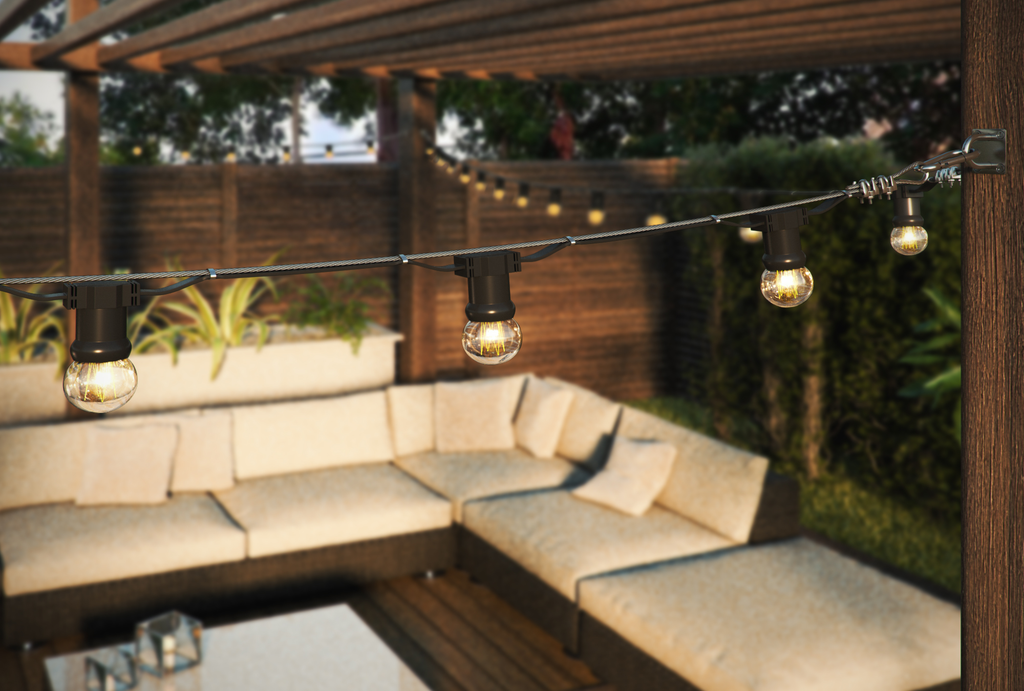
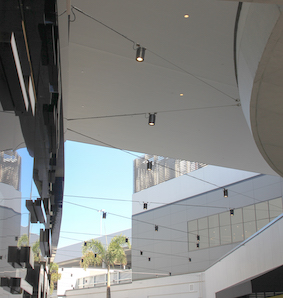
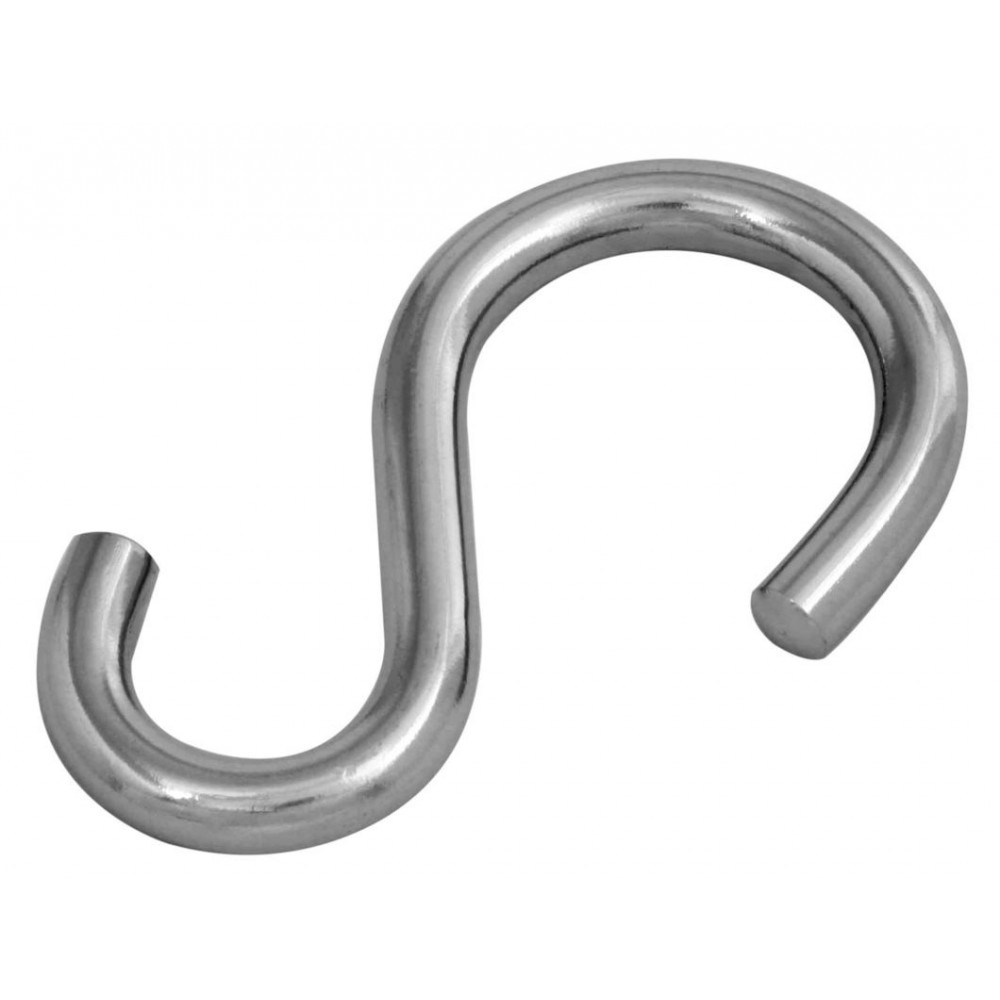
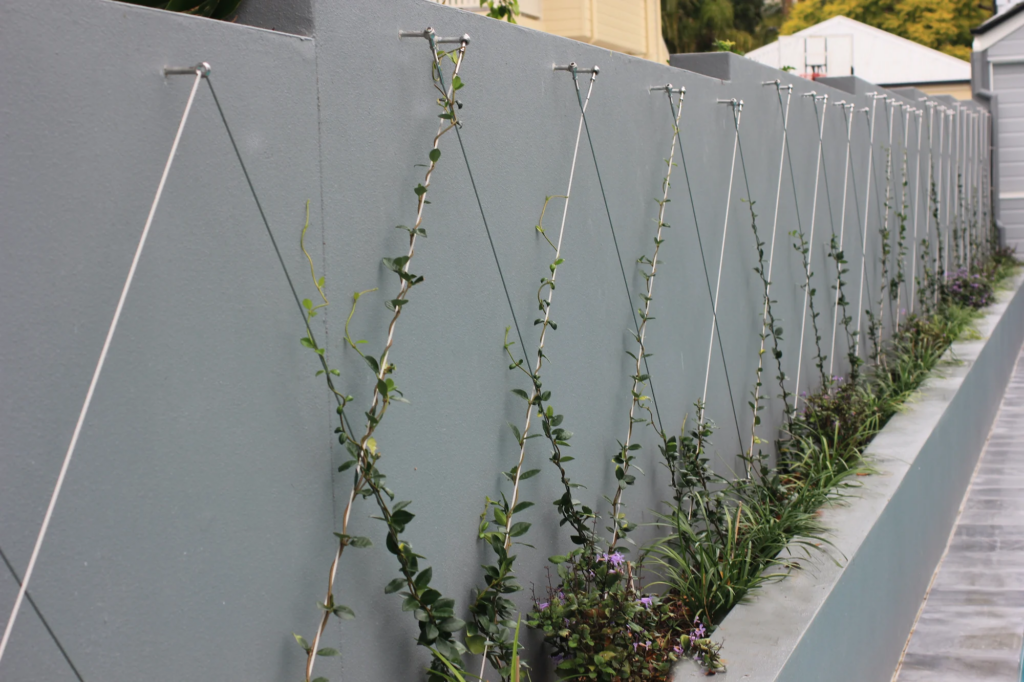
A string of warm festoon bulbs can turn a bare public plaza into the heart of a city. But every glowing canopy depends on parts you rarely notice: the cables, anchors, and fittings overhead. Choosing the right outdoor catenary lighting hardwareprotects pedestrians, keeps your project compliant, and saves money over time. This guide walks you through planning, selecting, and installing a safe suspension system. You will also learn what to look for in a supplier, so you can order with confidence.
Public plazas differ from backyards. Crowds gather beneath your lights, wind sweeps across open space, and rain, salt, and sun attack every component. A failed fitting is more than an inconvenience; it becomes a liability. Venue managers, councils, and event planners need hardware that carries its load with a wide safety margin and lasts through many seasons.
A catenary system solves this problem. A tensioned steel cable carries the full weight, while the festoon cable simply hangs from it. The bulbs never bear structural load, so the wiring stays protected and the spacing stays even. Planners also gain flexibility, because one wire can span a plaza without a forest of poles. Reliable lighting also draws evening foot traffic, which supports nearby shops and cafes.
What a Complete Suspension System Includes
Each span is made up of only a small set of the major parts, including:
Anchor points: Poles, building facades, or purpose-built posts that resist pull-out forces.
Eyebolts and wall plates: These elements bear the transfer from the cable load to the structure.
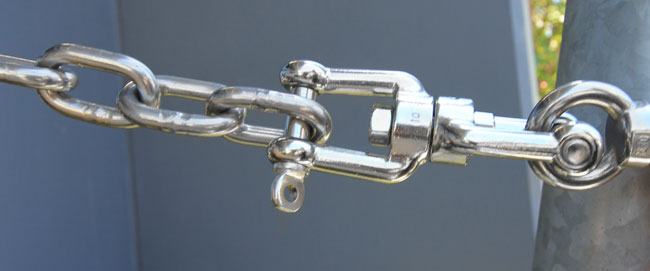
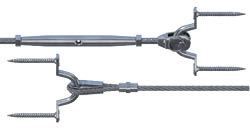
Turnbuckles and tensioners: These two pieces of hardware allow you to set and fine-tune the tension in the cables.
End Fittings: To keep your cable secure under tension, finish each end with a thimble and wire rope clips, or use a swage fitting for a clean, permanent result.
Catenary wire: This is essentially the main load-bearing cable.
Festoon clips: These clips fix the lighting cable onto the wire in such ways that they are uniformly spaced.
These parts can be individually purchased for custom jobs. However, catenary wire lighting kits bundle matched components, which cuts guesswork and speeds up ordering. For standard spans, a kit puts compatible parts in one box and keeps your crew on schedule.
Why Stainless Steel Wins in Open-Air Settings
Galvanized steel rusts at cut ends and scratches. Plated hardware flakes over time. Stainless steel catenary wire resists corrosion, keeps its strength, and looks clean for years, and even in coastal areas, marine-grade 316 steel stands up well against erosion caused by salt air, which can rapidly degrade cheaper metals. However, grade 314 is quite suitable for areas farther inland.
Pick a wire construction that balances flexibility and strength. A 7×7 or 7×19 rope bends easily around thimbles. Always source outdoor catenary lighting hardware from one coordinated range, because mixed metals invite galvanic corrosion and uneven load ratings.
Plan the Span Before You Buy
Not sure what cable size or fittings you need? Send us your span length and project details through our catenary wire quote form, and our team will recommend the right setup for you.
Hardware needs regular checks. Inspect turnbuckles, clips and anchors every few months, and after big storms. Look for damage, loose nuts and any discolouration, and replace worn hardware straight away. Stainless steel catenary wire is durable and needs very little maintenance, but a quick rinse with fresh water helps remove salt and grime, especially in coastal areas.
What to Look for in a Supplier
Look for a supplier that stocks quality stainless steel, cuts cable to length, offers genuine technical advice and ships quickly. These things help keep your project on budget and on schedule.
Miami Stainless supplies stainless steel rigging and fittings for demanding outdoor projects. Browse our range of stainless steel catenary wire, or request a quote and get advice from a team that knows marine-grade stainless steel.
Conclusion
Hanging festoon lights over a public plaza takes careful planning. Choose corrosion-resistant hardware, install it with safety in mind, and check it regularly to keep everything looking good and working safely for years. Stainless steel catenary wire stands up well to harsh weather, making it a reliable choice for outdoor lighting.
Not sure what you need? Request a quotefrom Miami Stainless and our team will help you choose the right wire and fittings for your project.
A failed shackle at sea rarely gives a warning. One moment the sail trims perfectly, and the next the rig is in the water. Most failures trace back to small, overlooked parts. Owners who chooseboat rigging hardware au sailors rely on, and inspect it on a schedule, avoid most of these emergencies. This guide walks through the rigging safety checks every yacht and marine vessel needs. It also shows how the right stainless components make each inspection easier and each repair longer lasting.
Why Boat Rigging Hardware AU Owners Inspect Before Every Season
Saltwater attacks every metal part aboard. Add UV exposure, vibration, and constant load cycling, and even strong components lose strength over time. Fatigue cracks start inside terminals and pins where nobody can see them. That is why experienced skippers inspect their rigging before every season and again after heavy weather.
A methodical check costs a few hours. A dismasting costs thousands of dollars and can injure the crew. Choosing 316 marine-grade boat fittings from the start slows corrosion and makes inspection results far easier to read.
Warning Signs That Demand Action
Small symptoms deserve attention. Rusty colored streaks, fine cracks, and stiff parts at a joint are the symptoms of some problem with the material. Brown staining beneath a fitting usually signals crevice corrosion. Galling on threads shows poor lubrication or mismatched metals. Stretched holes in tangs or chainplates mean the part took repeated overloads.
When you find any of these signs, replace the part. Hoping it lasts another season is a gamble no crew should take.
Why Material Grade Decides Rigging Life
Grade 304 stainless works well ashore, but it struggles in chloride-rich water. Grade 316 contains molybdenum, which resists pitting and crevice attack far better. For that reason, 316 marine grade boat fittings remain the standard for shackles, turnbuckles, and deck hardware on coastal and offshore vessels.
The same logic applies to fasteners. Marine grade bolts and nuts in 316 stainless steel hold their strength and thread condition, while ordinary hardware-store steel can rust within months. Mixing metals invites galvanic corrosion, so match your fittings to your fasteners. Reliable boat rigging hardware au owners buy should always carry clear grade markings and proper certification.
Solutions for Common Rigging Problems
Most rigging problems have simple fixes when you catch them early.
Worn fasteners: Replace them with freshmarine grade bolts and nuts, washers and locking nuts included. Old ones just aren’t worth the risk.
Aging wire: Replace standing rigging every 10 to 15 years, and sooner for offshore or heavily loaded boats.
Failed parts: Swap them for matching boat rigging hardware au professionals recommend, and log the date. Miami Stainless can help you match sizes and working loads.
Choosing a Supplier You Can Trust
Sourcing matters as much as inspection. A cheap fitting with unclear metallurgy defeats the purpose of every check above. Miami Stainless supplies marine stainless products to boaters, riggers, and boatbuilders across Australia, and the team understands what coastal conditions do to metal.
Browse the range of boat rigging hardware au sailors need, from shackles and turnbuckles to eye bolts and chainplate components. Each item suits harsh saltwater use. Their 316 marine grade boat fittings fit everything from weekend dinghies to offshore yachts. Miami Stainless staff can also answer technical questions about load ratings, compatibility, and corrosion protection before you buy.
Conclusion
Rigging safety is a matter of doing regular checks, acting quickly and getting good quality parts. Inspect standing and running rigging, shackles, turnbuckles, chainplates, and fasteners before every season, and keep a written log of what you find. Replace worn items right away with 316 marine grade boat fittings and matching Marine grade bolts and nuts. Whether you are refitting a yacht or maintaining a working vessel, dependable boat rigging hardware au suppliers carry keeps your crew safe and your vessel sailing longer.
Ready to upgrade your rig? Contact Miami Stainless today, explore the full marine range, and request your quote now.
FAQ’s
1. How often should I inspect my boat’s rigging?
In general, the recommended intervals for checking your boat’s rigging would be before every season, after a storm, and every month if the boat is used intensively.
2. When should standing rigging be replaced?
Generally, the owners’ consensus is that the standing rigging is replaced after 10 to 15 years. However, the boats that are used offshore and under heavy loads usually require much earlier replacement.
3. Is 316 stainless steel better than 304 for boats?
In a saltwater environment, 316 stainless steel is better in many ways. In addition to its resistance to general corrosion, its high molybdenum content makes it highly resistant to corrosion pitting and crevice corrosion.
4. Can I reuse old fasteners on my rig?
Do not do such a thing. New fastening equipment clamps down without any problem and does not get you involved in the possibility of some old fatigue issues still hidden.
5. What causes tea staining on stainless fittings?
It happens due to the reaction of the surface and the formation of rust from the contaminants or if the passivation step was not done properly. Tea coloration of the metal mostly has no consequence on the structural integrity but may indicate crevice or pitting corrosion beneath the surface.
Living walls have moved from novelty to expectation in Australian city projects. Developers, architects, and facility managers now want facades that cool buildings, cut noise, and win tenant approval. Yet every leafy panel depends on something less glamorous: the structure holding it up.Stainless steel green wall systemsgive designers a strong, corrosion-resistant structure. This guide explains how load-bearing infrastructure works, what to look for, and how to choose a supplier with confidence.
Why Stainless Steel Green Wall Systems Suit Commercial Buildings
Commercial facades punish every material they touch. Salt air, strong UV, constant irrigation, and city pollution attack weaker metals within a few seasons. Mild steel rusts, and coated alternatives chip and peel at fixing points, which is exactly where loads concentrate. Marine-grade 316 stainless steel resists pitting and staining, so cables, anchors, and brackets keep their strength year after year.
Stainless also protects your budget. A failed fixing on a fifth-floor garden means scaffolding, plant removal, and tenant complaints. Choosing durable hardware at the start reduces those risks and keeps maintenance predictable. Stainless also looks sleek against foliage, so the structure adds to the design rather than fighting it.
Wire Trellis: A Lightweight Route to Green Facades
A green wall wire trellis kittypically bundles cable, end fittings, tensioners, and anchors, so installers work from one matched set instead of sourcing parts separately.
When you compare wire trellis systems Australia suppliers offer, confirm that every component uses the same stainless grade. Mixing metals invites galvanic corrosion, which weakens fittings from the inside.
Features to Compare Before You Buy
Use this checklist when you review any product:
Material grade: insist on 316 for coastal or high-humidity sites.
Tested capacity: ask for working load limits, not just breaking strength.
Adjustability: tensioners let crews retighten cables as plants mature.
Compatibility: a green wall wire trellis kit should suit your wall type, whether concrete, brick, or steel frame.
Good stainless steel green wall systems make each item on that list easy to verify. If a supplier dodges questions about grade or load ratings, move on.
Common Mistakes That Cost Projects Money
Teams new to vertical gardens repeat a few errors. Some size the structure for dry weight and forget irrigation. Others pick cheap fasteners for a premium facade and regret it within two years. A few install cables too slack, so plants sag and crowd each other. Address each risk during design, and you avoid most headaches later.
Why Choose a Local Specialist for Your Project
Miami Stainless supplies architectural stainless hardware to Australian builders, landscapers, and designers. The team understands that a green walls succeeds or fails on its fixings, so the range focuses on strength, finish, and practical installation. Whether you need a standard kit or custom-cut lengths, the team can match components to your wall, your plants, and your timeline.
Clients also gain straightforward advice. Rather than pushing oversized packages, Miami Stainless helps you specify what the site truly needs. For anyone researching wire trellis systems Australia wide, that local expertise shortens the path from concept to installation.
You can also use our Green Wall Builder to help you design your next project.
Conclusion
A thriving vertical garden starts behind the leaves. Stainless steel green wall systems give commercial buildings a durable, low-maintenance frame that handles weight, weather, and time. Plan the loads, use one metal grade throughout, and match the structure to your plants. With Miami Stainless as your supplier, you get quality hardware and practical guidance from the first sketch to the final cable. Ready to plan your project? Visit Miami Stainless today, request a quote, and turn your vertical garden idea into a safe, lasting feature.
FAQs
1. Is 316 stainless steel necessary for a green wall? At least for sites with salt spray, coastal, humid weather, or irrigation, 316 stainless steel will be a good choice.
2. Which plants grow best on a wire trellis? Varieties that need to climb, like the star jasmine, Boston ivy, passionfruit are recommended plants.
Marine builders, fabricators, and trade buyers across Australia face the same challenge every project cycle: sourcing fasteners and fittings that won’t corrode, fail, or slow down production schedules. When you buy stainless steel hardware from a supplier that stocks grade 316 and 304 components in depth, you remove that risk from the equation entirely. This guide walks through what separates a dependable stainless steel supplier from one that simply resells generic stock, and why trade buyers across Australia turn to Miami Stainless for consistent quality, competitive trade pricing, and fast dispatch on every order. Whether you need a single order or an ongoing supply arrangement, the right sourcing decision saves time, money, and rework.
Why Trade Buyers Choose a Dedicated Stainless Steel Supplier
Working with a single, dependable supplier changes the economics of any build. Instead of chasing quotes from three or four vendors every month, a trade account covers marine hardware, architectural fixings, and general fasteners under one invoice and one delivery schedule. For contractors managing multiple job sites, sourcing fittings from one place means bolts, nuts, washers, and brackets arrive matched in grade and finish, so corrosion resistance stays consistent across an entire structure. Buyers who commit to trade stainless supplies also benefit from pricing built around long-term relationships rather than one-off purchases, which helps protect margins on fixed-price contracts.
Trade Pricing for ABN Holders
If you hold an ABN, you can register for a trade account with Miami Stainless and access trade pricing across our full range of stainless steel hardware, fittings, and fasteners. This means builders, fabricators, and contractors get consistent, competitive rates on every order, not one-off promotional discounts that disappear after a single purchase.
Setting up a trade accountis simple: register with your ABN details, and once verified, trade pricing is automatically applied at checkout on eligible products. This gives trade professionals a straightforward way to plan costs across a project without needing to negotiate pricing on every order.
Marine-Grade Fasteners and Fittings for Trade Buyers
Coastal and marine environments punish ordinary fasteners within months. Salt spray, humidity, and constant moisture attack plated steel and even lower-grade stainless quickly, which is why grade 316 stainless steel hardware has become the default specification for docks, pontoons, boat fittings, and balustrades near water. Grade 304 remains a solid, cost-effective choice for indoor and low-exposure applications where extreme corrosion resistance isn’t required. Miami Stainless carries both grades across bolts, screws, eye bolts, turnbuckles, and swage fittings, so builders don’t need to split orders across multiple suppliers to match specification sheets. Reliable stainless steel fittings at this level of consistency reduce the chance of mismatched hardware compromising a structure’s long-term durability.
Choosing the Right Stainless Steel Supplier
Not every seller listed online can back up its claims about grade and certification. Before you buy stainless steel hardware from any vendor, confirm they provide mill certificates, publish accurate grade markings, and hold enough depth of stock to fulfil repeat orders without delay. Learn more about Miami Stainless and our 22+ years of experience supplying trade professionals across Australia. A reliable stainless steel supplier will give you clear price structures, fast and friendly service from your account manager, and shipping arranged to match your schedule — you can read more about ourdelivery and dispatch process here.
Trade Accounts Built for Contractors and Resellers
Contractors, boat builders, and hardware resellers who buy stainless steel hardware regularly need more than a product catalogue; they need a pricing structure built around an ongoing relationship. Miami Stainless offers ABN-verified trade pricing, flexible freight options, and dedicated account support for businesses placing repeat orders throughout the year. Resellers stocking stainless steel hardware for their own retail customers gain access to consistent lead times and trade rates that protect their margins. You can review current stock, grades, and trade pricing directly on the Miami Stainless website, where product ranges are organised by application rather than buried in generic categories.
Conclusion
Sourcing decisions made early in a project affect maintenance costs for years afterwards. Choosing to buy stainless steel hardware from a supplier with proven grade accuracy, deep stock, and dedicated trade pricing protects both your budget and your reputation on site. From marine-grade bolts to architectural stainless steel fittings, matching every component to the right specification keeps corrosion issues off the punch list. A dependable range of stainless steel hardware and fasteners, backed by pricing built for trade accounts, is exactly what busy contractors and resellers need. Ready to open a trade account? Visit Miami Stainless today and register your ABN to start accessing trade pricing on your next order.
FAQs
1. Do I need an ABN to access trade pricing? Yes. Trade pricing is available to businesses with a valid ABN. Once you register and your account is verified, trade pricing is applied automatically on eligible products.
2. How do I know if a stainless steel supplier is reliable? Mill certificates, accurate grade labelling, deep stock on hand, and consistent lead times are good indicators that a stainless steel supplier is dependable for long-term trade accounts.
3. Can I mix stainless steel fittings from different suppliers on one job? Mixing different grades or finishes can lead to inconsistencies in corrosion resistance, which affects the longevity of the structure. Sourcing all fittings through one supplier is generally the safer approach.
4. How do I set up a trade account with Miami Stainless? Simply register with your ABN details on the website. Once verified, trade pricing will apply automatically at checkout on all eligible products.
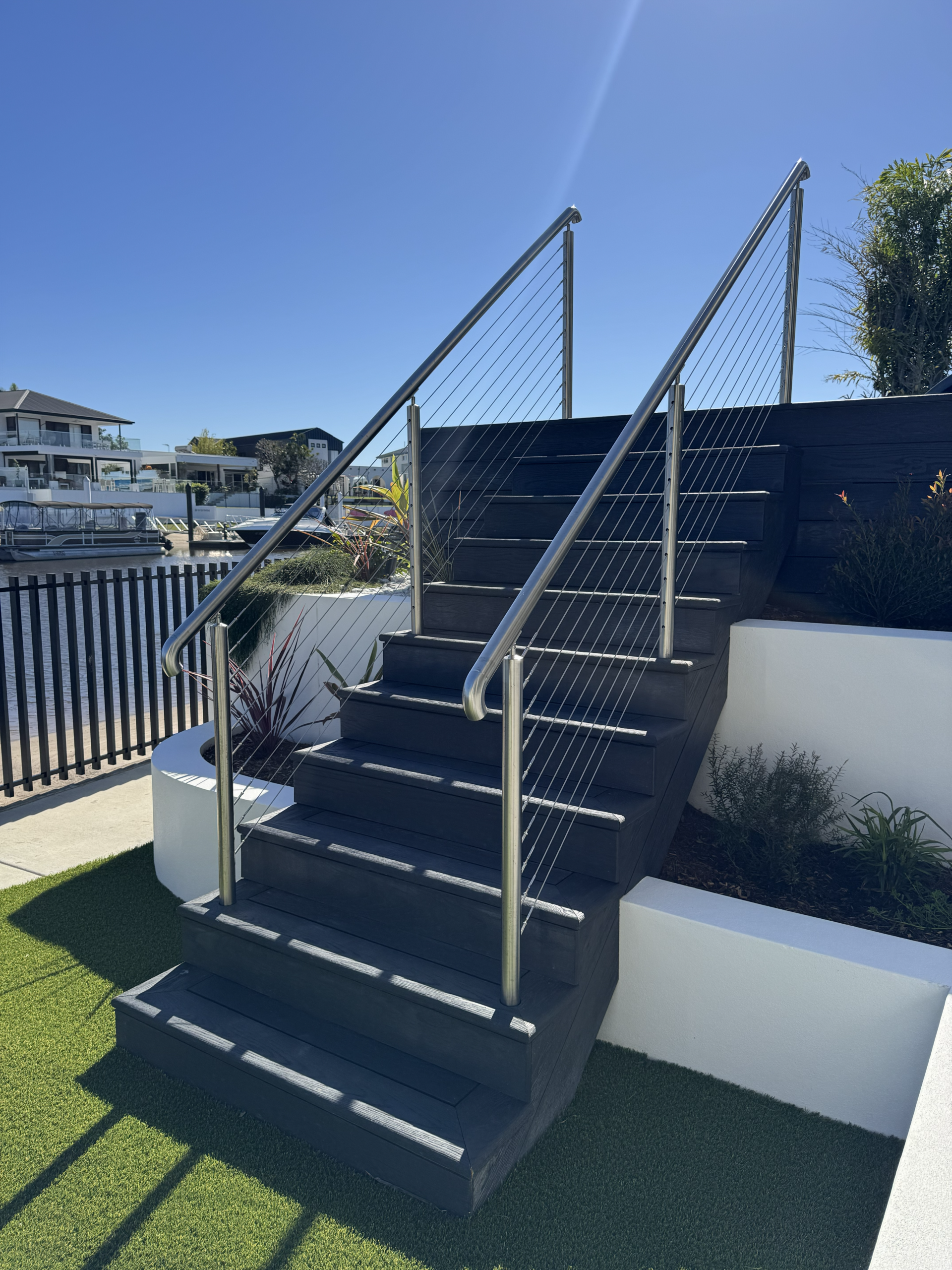
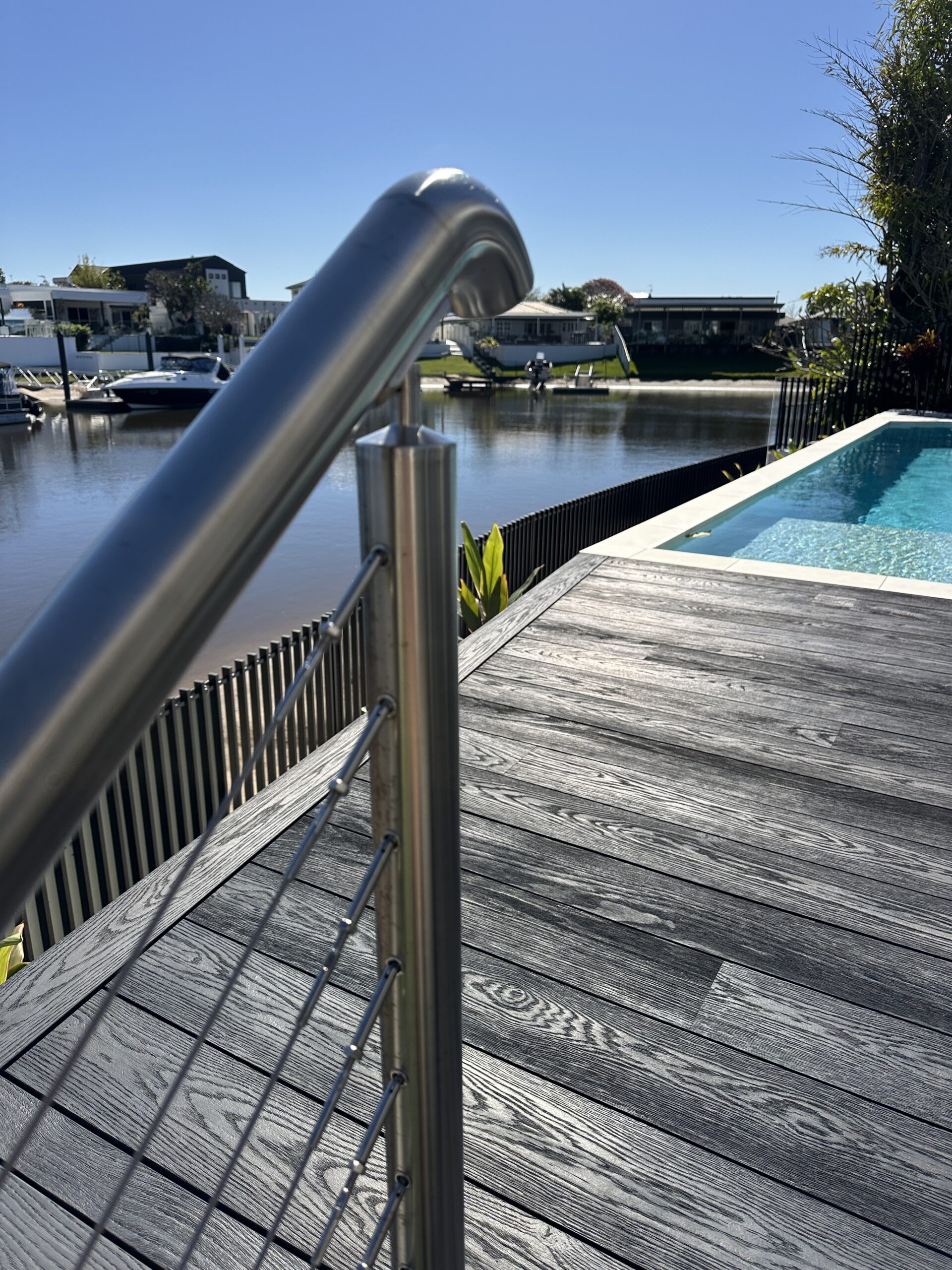
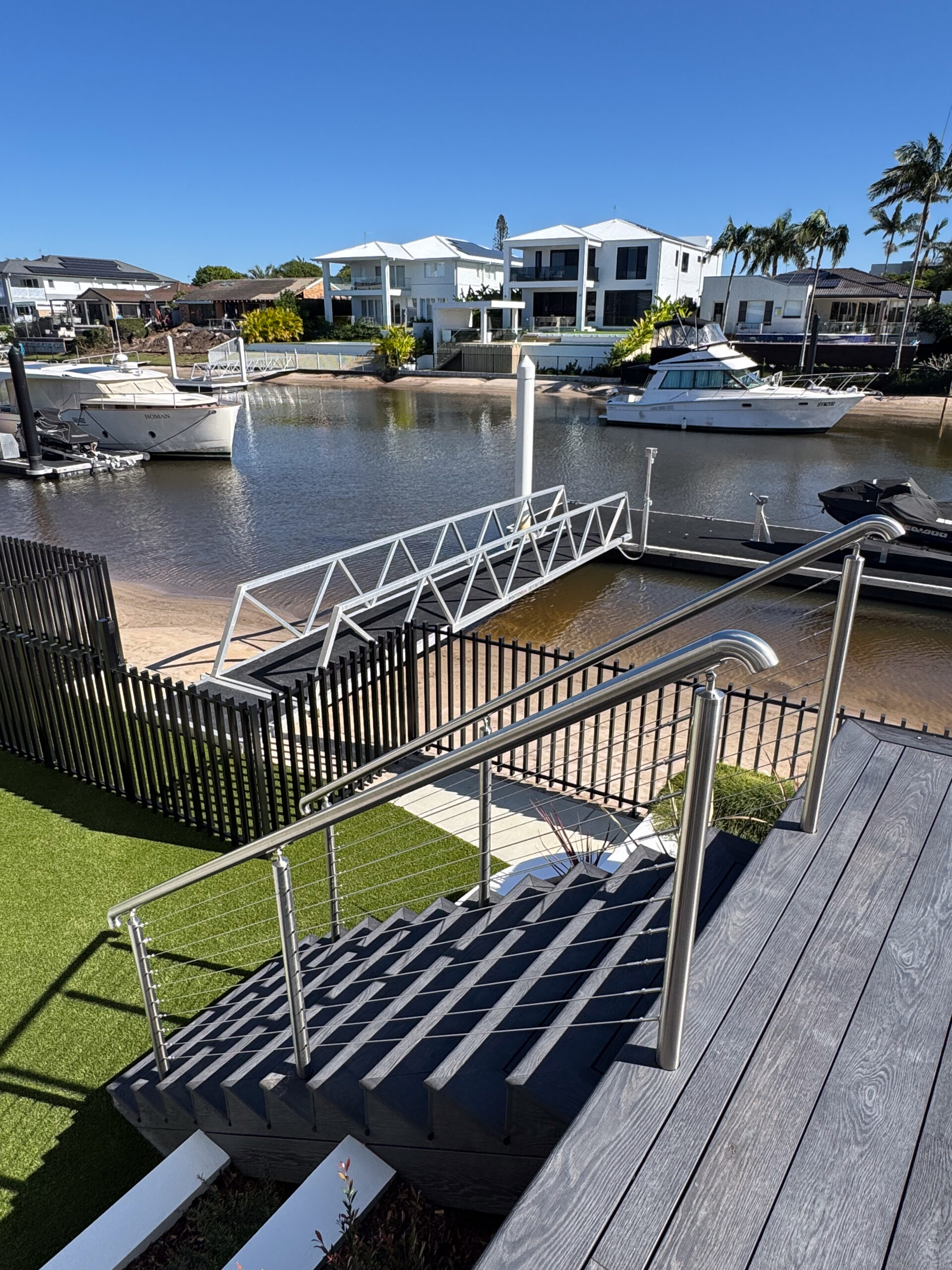
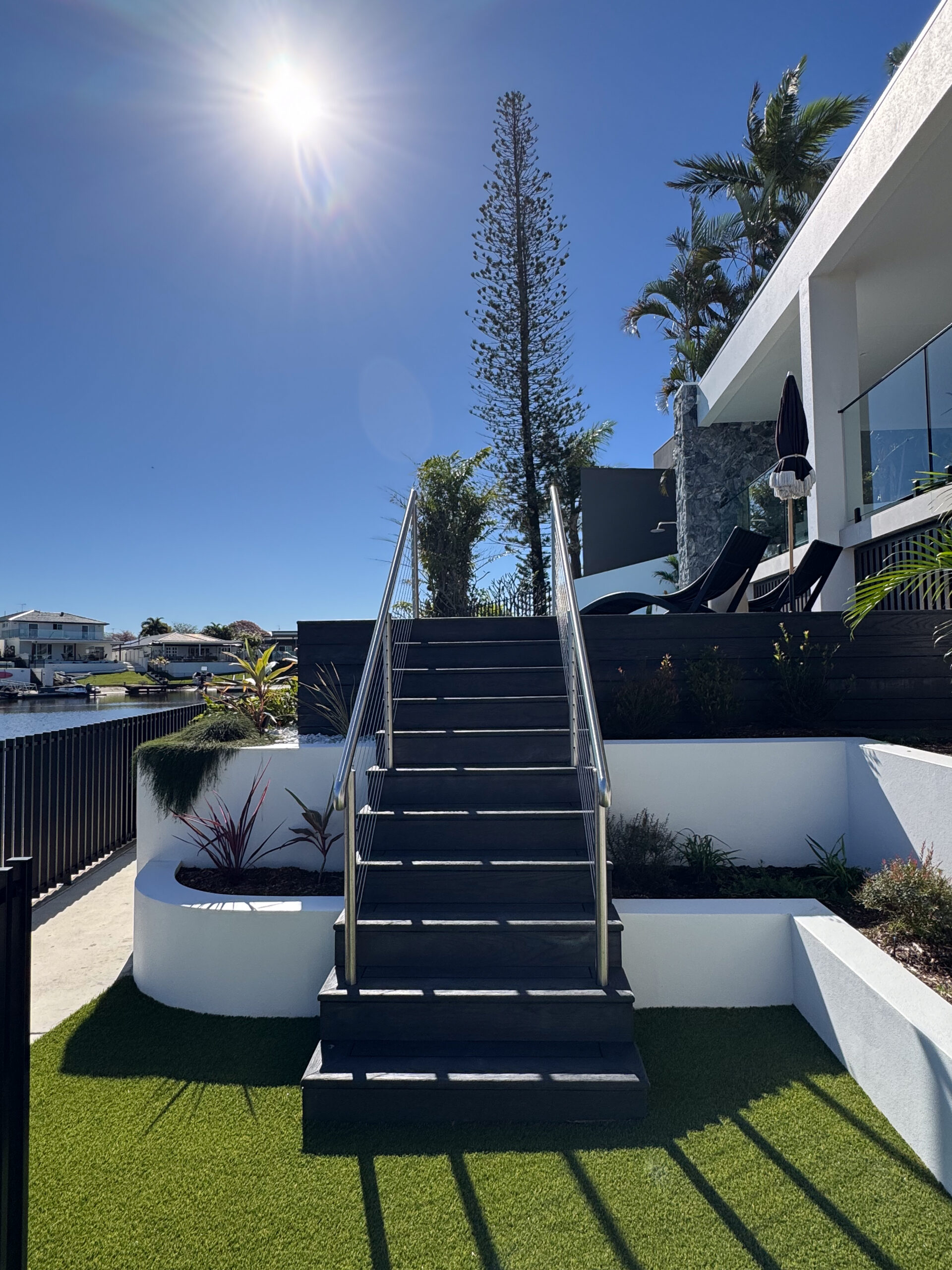
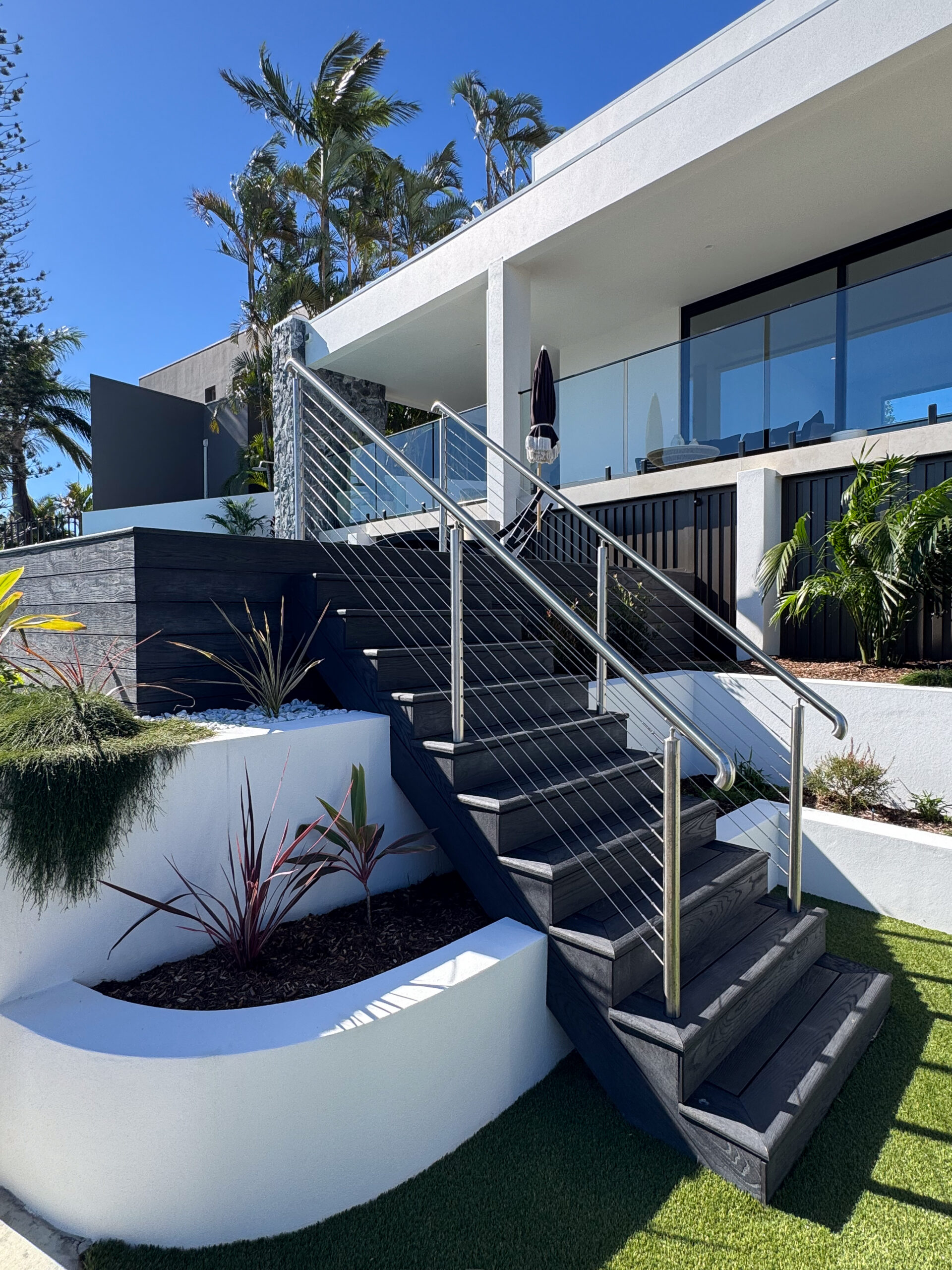
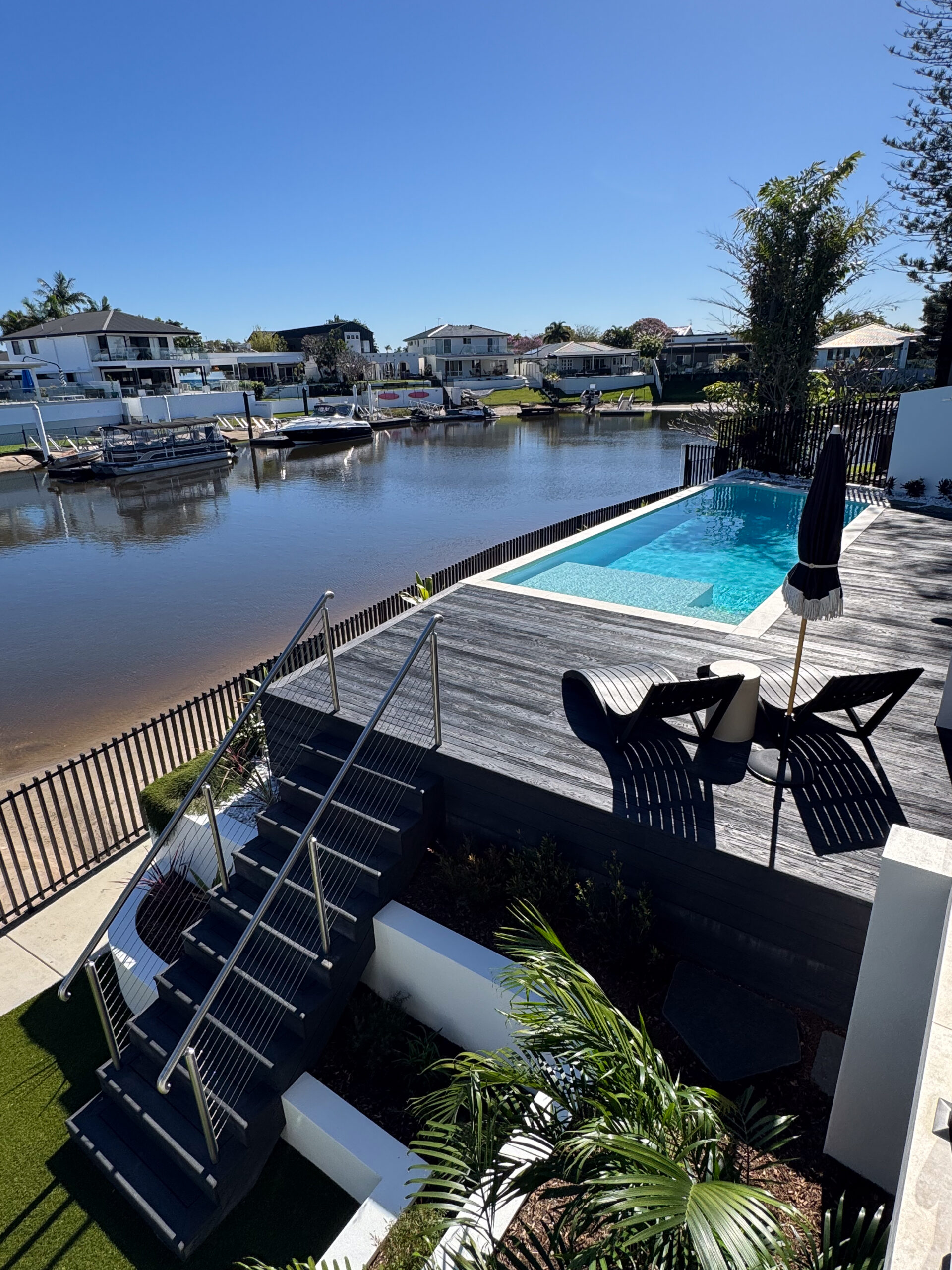
When Altar Decks began construction on a timber staircase for a canal-front property on the Gold Coast, the design called for a stainless steel balustrade that could handle constant sun, salt air and water exposure while keeping a clean, architectural look. Altar Decks brought in Miami Stainless to design and supply the wire balustrade system for the staircase, which runs from the raised pool deck down to a private pontoon on the water.
A Challenge Beneath the Surface
Our team identified a factor that ruled out a standard post-mounting approach. The stair treads had been built using a new type of decking board that flexes under load, meaning a standard baseplate-mounted post would not stay stable over time.
Rather than compromise on strength, Miami Stainless went back to the drawing board to design a hidden mounting method specific to this stair tread.
Designing a Hidden Mounting Solution
Our team was supplied detailed on-site measurements, including the exact hole spacing needed to suit the stair tread, and used these to design a bespoke concealed mounting bracket in Sketchup.
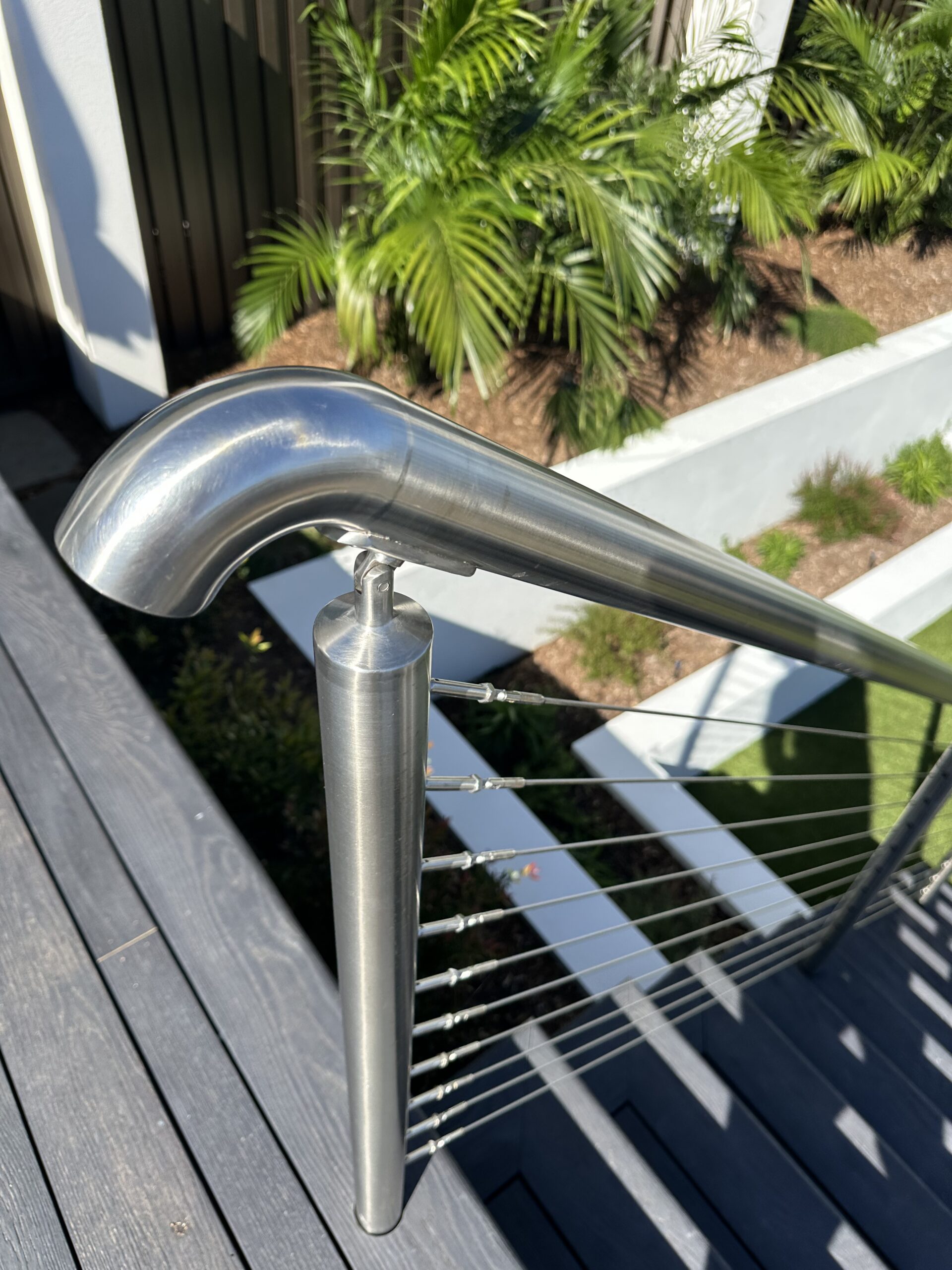
The result secures each stainless post firmly through the stair tread structure itself, rather than relying on the flexible decking board for stability. All fixing hardware is hidden from view, so the post appears as a single, clean line from every angle.
Built for the Waterfront
Once the design was finalised, the custom brackets and stainless steel posts were fabricated and installed on site, fitting the full staircase with a wire balustrade system engineered to handle the canal-front conditions long-term.
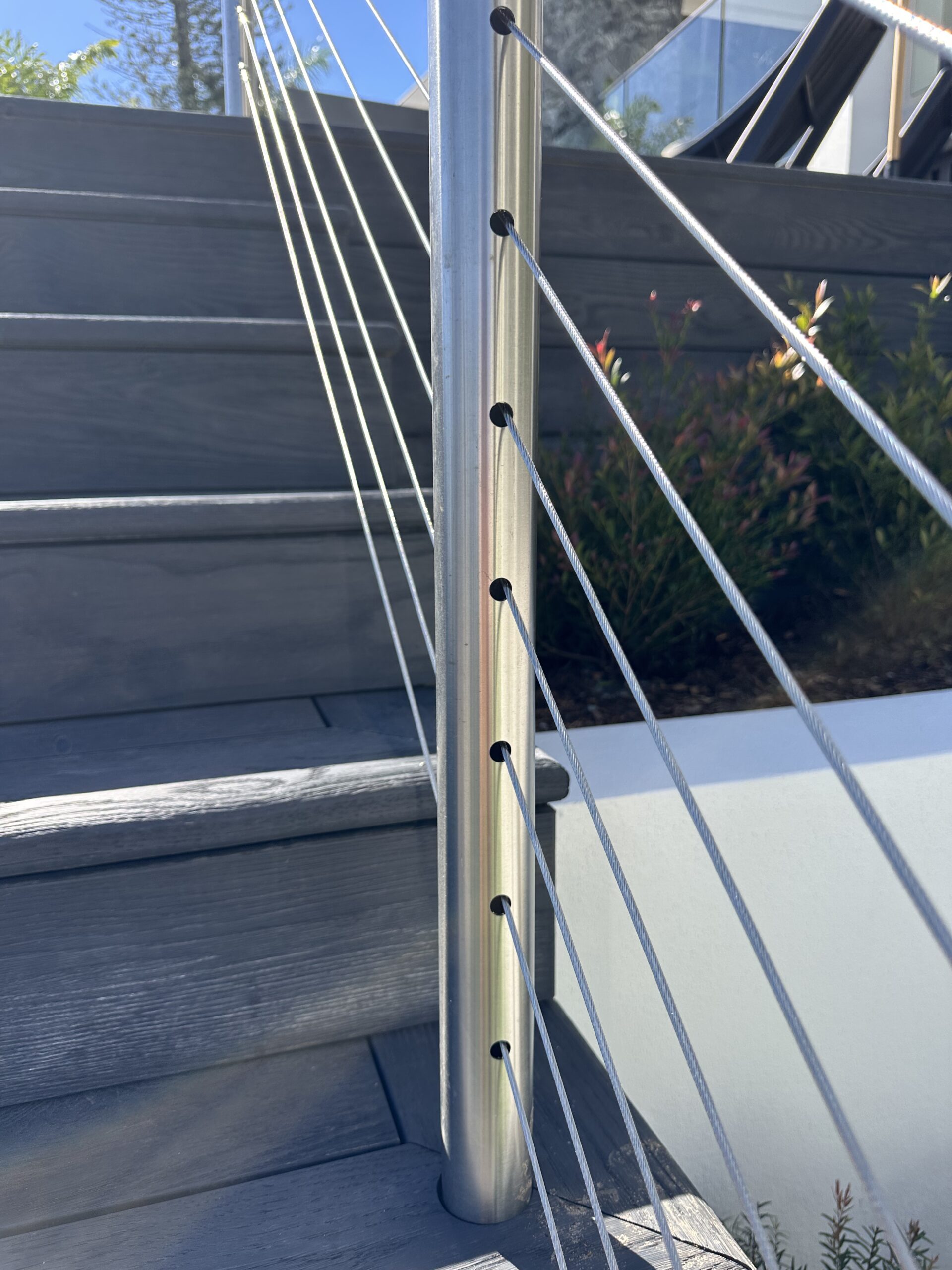
The slim stainless wires keep the staircase feeling open, letting the focus stay on the water views and the craftsmanship of Altar Decks’ timber build beneath it.
A Result Both Teams Are Proud Of
The finished staircase is now a standout feature of the property: a run of steps finished with a sleek stainless steel post and wire balustrade system, running securely from the pool deck to the water’s edge.
This project is a good example of what a genuine site assessment adds to a trade collaboration. A standard mounting post would not have held up long-term on this deck. By identifying the issue early and designing a custom bracket, Miami Stainless delivered a balustrade solution that’s both secure and true to the clean design intent of Altar Decks’ build.
Project: Waterfront Staircase, Gold Coast Location: Gold Coast, Queensland Builder:Altar DecksSystem: Custom Miami Stainless wire balustrade with concealed post mounting
Brisbane decks deal with strong sunlight, heavy rain, humidity, and salty air throughout the year. These conditions can affect exposed fixings. The Queensland Government notes that coastal decks face higher corrosion risks from salt, sand, and wind. A reliable stainless steel suppliercan help you select hardware suited to the deck’s location and exposure.
Suitable hardware can help keep maintenance under control. At Miami Stainless, we supply marine-grade stainless steel hardware for trade and DIY projects. Our range includes deck, balustrade, shade, and outdoor fittings.
Stainless Steel Supplier: Consider Brisbane’s Climate First
The conditions around a deck should guide your hardware selection. Coastal and inland sites do not face the same level of exposure. Rain, humidity, salt, and sunlight can all affect exposed hardware. The fitting must also suit the connection and expected load.
The Queensland Building and Construction Commission highlights corrosion protection for exposed decks. Protection suitable for internal areas may not be enough outdoors. A good stainless steel supplier can help you select hardware for the conditions at your site.
Stainless Steel Hardware for Exposed Deck Connections
Stainless steel hardware includes more than deck screws. Depending on the project, you may need bolts, washers, nuts, brackets, wire fittings, connectors, or balustrade components. These products do different jobs. A fixing suitable for one connection may not be right for another.
The grade deserves attention as well. Sunshine Coast Council specifies marine-grade 316 stainless steel for certain coastal infrastructure. This does not mean every Brisbane deck needs 316 stainless steel. The appropriate grade depends on exposure, application, specifications, and installation requirements.
For Brisbane projects, a stainless steel supplier can also confirm whether the selected components are suitable for outdoor use.
Trade Stainless Supplies: Build the Hardware List Before Buying
A clear list makes ordering trade stainless supplies much easier.
Start by working through each connection point. Record the fitting type, size, quantity, and location. Check those details against the deck plans and installation instructions.
A basic hardware schedule may include:
Decking: screws suited to the decking material and installation method.
Structural connections: bolts, washers, nuts, or brackets specified for the application.
Balustrades: posts, wire, tensioners, end fittings, and related components.
Shade structures: connection plates, eyes, hooks, and suitable rigging hardware.
Having these items written down gives you a clearer picture of the project. It also makes missing components easier to spot before installation.
Treated timber requires some care. Certain treated timber products can increase corrosion risks around metal connectors.
Where to Source Deck Hardware for Brisbane Conditions
A suitable product is not simply the available one. It needs to meet the requirements of the job. Before ordering, check the grade, dimensions, compatibility, specifications, availability, and installation guidance. Confirm that the selected grade and sizes are appropriate for the application.
A supplier with a broad range can be useful for decks requiring several hardware systems. Related components are easier to source when they are available together. This matters when fittings need to work together across the same deck. It can also make the installation process easier to manage.
Stainless Steel Fasteners in Australia: Choose By Application
Stainless steel fasteners in Australia come in different grades, sizes, and thread types. Selection should follow the requirements of the connection. Deck screws are commonly used to secure boards. Bolts can be used for structural connections. Washers may help distribute pressure around certain bolted joints.
Sunshine Coast Councilguidance recommends suitable stainless steel bolts, washers, and nuts for specified treated-timber applications. It identifies 304 and 316 grades.
The highest-priced fixing is not necessarily the right one. Look at what the connection requires before making a choice. Fixing length matters too. A longer fixing does not always provide a better result. It needs to form the required connection without creating issues with surrounding material.
Plan Balustrade and Shade Fittings Early
Balustrades, handrails, and shade structures can add several hardware requirements to a deck project. Each system needs its own connection points.
Avoid Compatibility Problems with Outdoor Hardware
Stainless steel fasteners can provide corrosion resistance in suitable outdoor applications. Their surrounding materials still need to be considered. Dissimilar metals can contribute to corrosion when they come into contact. Before installation, check these points:
Check the metal used in nearby brackets and connectors.
Follow the fixing manufacturer’s compatibility advice.
Avoid unsuitable contact between different metals.
Inspect older fixings for corrosion before reuse.
Replace damaged components rather than covering them.
The installation method matters too. Some fixings require pre-drilling or specific spacing. Follow the supplied instructions for the particular product. Queensland storm-tide guidance also highlights metal compatibility where corrosion resistance is important.
Get Your Brisbane Deck Ready for Summer
Sort the hardware before the deck work starts. You then have time to check sizes, grades, quantities, and compatibility. Begin with the deck’s exposure. Inspect existing connections for damage or corrosion. Check the hardware against the project requirements before placing the order.
A final check should cover:
Review the deck’s location and exposure.
Check existing fixings and connection points.
Confirm the required stainless steel grade.
Measure every replacement component.
Check compatibility with timber and other metals.
Confirm quantities before placing the order.
Read the installation instructions before starting work.
Taking these steps can help prevent delays. It also gives you a better chance of selecting hardware suited to the conditions.
Make Your Hardware Choices Before the Weather Does
Brisbane’s summer weather can be hard on exposed hardware. Preparation starts with the site conditions and the state of the existing connections.
Miami Stainless, a trusted stainless steel supplier, offers more than 4,000 products online. The range includes marine-grade hardware, balustrade fittings, shade components, and rigging products.
If you are preparing a Brisbane deck, check the hardware requirements before ordering. Choose products that meet the project specifications and installation requirements.
Frequently Asked Questions
1. How can a stainless steel supplier help with deck hardware?
A suitable supplier can help compare grades, fittings, and fasteners for the deck’s exposure and installation requirements.
2. What should I consider when ordering trade stainless supplies?
Check grades, sizes, quantities, compatibility, and installation requirements before placing your order.
3. Why is stainless steel hardware useful for outdoor decks?
It can provide corrosion resistance in suitable applications. The range includes screws, bolts, washers, brackets, connectors, and balustrade components.
4. Should treated timber affect my hardware selection?
It can. Some treatments may increase corrosion around metal connectors. Check the treatment details and fixing recommendations before installation.
5. Are stainless steel fasteners in Australia suitable for every outdoor deck?
No. Consider exposure, grade, dimensions, materials, loads, and installation methods before selecting the fixings.
Homeowners planning a deck, staircase, or balcony upgrade often search for reliable wire balustrade supplies before starting the project. A well-planned installation gives you a modern, open railing that lets light and views through without sacrificing safety. This guide walks through each stage of installing the Miami Stainless Standard DIY System for Timber Posts, from measuring your space to tensioning the final wire, and points you toward the tools and materials needed along the way.
Before you pick up a drill, it helps to understand the parts involved. The Standard DIY System kit includes bottlescrews, thimbles, swage sleeves, saddle eye straps, and self-tapping screws, plus the stainless steel wire rope itself (sold separately, priced per metre). Getting the right components from the beginning will save effort and avoid expensive, unpleasant mistakes later on.
Choosing the Right Wire Balustrade Supplies
Not all kits are equal. Quality wire balustrade supplies determine how long a railing lasts and how easy it is to fit. Look for marine-grade stainless steel wire rope, corrosion-resistant fittings, and posts rated for outdoor exposure. Miami Stainless offers a full range of components designed for coastal and residential settings, so the hardware holds up against salt air, rain, and UV exposure over time.
The Standard DIY System is a true do-it-yourself kit suited to timber posts, using hand-swaged fittings rather than mechanical grip fittings. Installation requires a hand swaging tool and a set of wire rope cutters, so it’s a more hands-on process than some of Miami Stainless’s other systems — but that’s exactly what makes it a budget-friendly option for DIYers comfortable with basic tools.
Step 1: Plan and Measure
Measure the total length of the railing to be installed and determine where posts and intermediate supports will be required. Check the current NCC wire balustrade regulations for minimum wire spacing for a standard 1-metre-high handrail using 3.0mm 7×7 wire, this is typically 80mm spacing between wires, or around 11 runs, to prevent gaps that could pose a fall risk for children or pets. The Standard DIY System can span up to 10 metres in a single run, or up to 16 metres when using a tensioner at each end.
Step 2: Mark and Drill the Holes
Mark and drill all holes at the required spacing, keeping every hole level with its counterpart on the opposite post. A 4mm hole through your intermediate (middle) posts allows the stainless steel wire to pass through cleanly. Using a template to mark out the holes helps keep spacing consistent along the run, especially useful on longer sections.
Tip: If you’re running wire through tube or square metal posts in the middle of a timber run, use grommets to stop the wire chafing where it passes through — if you’re using grommets, drill an 11/32″ hole instead of the standard 4mm.
Step 3: Create the First Loop and Swage It
Slide one end of your wire through a swage sleeve and guide it around a thimble. Complete the loop by inserting the end of the wire back through the swage sleeve, leaving about 2mm of wire protruding. Swage the sleeve twice, spaced slightly apart, using your hand swaging tool.
Step 4: Attach the First Saddle and Thread the Wire
Insert a saddle (eye strap) through the loop you’ve just created and mount it to your end post using the screws provided on timber posts, the saddles are simply screwed straight into the wood. With the saddle fixed to your end post, pull the wire straight through to the inside face of the opposite end post and cut it roughly 100mm shorter than that distance. Pass the wire through your pre-drilled intermediate posts, then create a second loop at the other end following the same swaging method as Step 3.
Step 5: Attach the Bottlescrew and Second Saddle
Attach a saddle to the opposite end post using timber screws. Remove the pins from both ends of your bottlescrew by unfastening both split rings. Attach one end of the bottlescrew to the loop in your wire, and the other end to the mounted saddle, then reinsert the pins and rings. You can adjust tension by screwing or unscrewing the middle section of the bottlescrew by hand — a ProRig Multi Tool is available as an optional add-on if you want an easier grip while tensioning.
Step 6: Tension and Lock Off
Tighten each cable one by one, from bottom to top, until you feel that there is no slack in it. Once the proper tension has been applied to the wire, secure it to the body of the bottlescrew by locking the hex nuts. It’s best to use a tension gauge for an accurate measurement; otherwise, a simple deflection test pressing the wire and checking it doesn’t move more than a few millimetres will get you close.
Step 7: Final Inspection
After tensioning every wire, walk the length of the railing and check spacing, tightness, and post stability. Confirm every fitting is correctly aligned with good metal-to-metal contact, and that no wire sags more than a few millimetres under pressure.
Why Material Quality Matters
Coastal properties place heavy demands on outdoor hardware. Grade 316 stainless steel wire rope resists rust far better than standard grades, which matters if a railing sits near the ocean or a pool. Cutting corners on material quality often leads to premature corrosion or fitting failure within a few years.
Reliable wire balustrade supplies pay off in long-term maintenance. Higher-quality parts need less frequent tightening and cleaning, while a cheaper wire kit can loosen or stain within a single season. Sourcing every part of your kit — wire, sleeves, saddles, and bottlescrews — from one supplier also avoids compatibility issues between mismatched fittings and cable diameters.
Common Mistakes to Avoid
Wide spacing between posts — when the distance between intermediate posts is excessive, the wire can sag and fall out of compliance with code requirements.
Skipping the template — marking holes freehand often leads to misalignment, making it harder to pull the lines taut and level.
Tensioning too fast — pulling lines up to tension too quickly can bow the end posts or leave lines loose once the timber settles.
Mismatched fittings — using fittings sized for the wrong cable diameter results in weak, unreliable joints.
Skipping the manufacturer’s guide — tolerances vary slightly between kits, and working from memory instead of the official instruction manualis an easy way to make avoidable mistakes.
Planning ahead and sourcing all your wire balustrade products from one kit helps you avoid most of the mistakes above.
Conclusion
A DIY wire railing project becomes manageable when you plan carefully and choose quality materials from the start. Every stage, from mounting posts to tensioning lines, is geared toward safety and longevity. Sourcing high-quality wire balustrade supplies from a reputable supplier like Miami Stainless will add years to your project’s life and leave you with a clean, professional result. If you’d like a visual walkthrough alongside these steps, Miami Stainless’s official installation video covers the whole process start to finish. Ready to get started? Visit Miami Stainless today to browse the Standard DIY System, fittings, and stainless steel cable built for Australian conditions.
FAQs
1. Can I install this method myself?
Yes, even someone with no prior experience can install the Standard DIY System, though it does require hand swaging on-site.
2. Do I need special tools?
Other than common handyman tools such as an electric drill and drill bits, you’ll need a hand swaging tool and a set of wire rope cutters. A ProRig Multi Tool is available as an optional add-on for easier tensioning.
3. What size and type of stainless steel wire should I use?
This system almost always uses 3.0mm 7×7 stainless steel wire rope, valued for its bright finish, appearance, strength, durability, and low stretch.
4. What’s the maximum length I can run?
The Standard DIY System can span up to 10 metres in a single run. Longer runs of up to 16 metres are achievable with a tensioner at each end — contact Miami Stainless for guidance on longer spans.
5. Can I take the balustrade around corners?
It’s not recommended. Bending the wire around corners can fatigue it, put excessive stress on the posts, and make it difficult to achieve the tension required to meet NCC regulations.
Choosing the right fastener for a brickwork project does not have to feel complicated. Anyone searching for concrete screw anchors Australiawide is usually trying to solve one of two problems: which size fits the job, and which material will actually last outdoors. Builders, tradespeople, and DIY renovators all face the same question when a bollard, bracket, or fixture needs to sit securely in solid concrete. The good news is that a handful of simple guidelines cover almost every situation, from a small balustrade post to a heavy-duty structural bracket. This guide breaks down the main types, common sizes, and material grades so the decision becomes straightforward rather than overwhelming.
Concrete Screw Anchors Australia: Understanding the Basics
A concrete screw anchor functions by self-tapping, i.e., drilling its own thread into a pre-drilled opening, thus gripping the masonry directly without the necessity of employing any sleeve or plug additionally. Installers value this style because it saves time on site and creates a tight, vibration-resistant hold. Compared to anchors of expanded type that are anchored in the substrate via mechanical spreading, screw anchors penetrate the concrete itself, which, as a consequence, reduces the probability of cracking near an edge of the slab or the footing.
Two material choices dominate the Australian market: galvanised steel and stainless steel. Coastal properties, pool surrounds, and marine environments generally call for stainless steel because salt air accelerates corrosion on standard coatings. Inland projects, sheds, and temporary structures often use galvanised options instead, since the zinc coating offers solid protection at a lower price point.
Common Types of Concrete Anchor Bolts
Several styles of concrete anchor bolts appear across hardware catalogues, and each suits a slightly different application.
Sleeve anchors expand within the hole; the result is that when the nut tightens, which is why they are good for the most part and will fit any brackets and fixtures.
Flush head sleeve anchors sit level with the surface, which suits balustrades or handrails where a protruding bolt head would create a trip hazard.
Screw bolts thread directly into the brickwork and allow for removal and reinstallation, a handy feature when equipment needs periodic maintenance.
Chemical or adhesive anchors bond a threaded rod into the hole using resin, delivering high load capacity for structural applications.
Selecting among these concrete anchor bolts depends on the load the fixture will carry, whether the fastener needs to sit flush, and how close the fixing point sits to the edge of the concrete.
Sizing Guide: Why the 10mm x 100mm Concrete Anchor Is So Common
Diameter and length both affect how a fastener performs, and getting the sizing wrong is one of the most frequent mistakes on site. As a general rule, the anchor should embed deep enough into solid, uncracked concrete to carry the intended load, while leaving enough length above the surface to pass through the fixture and any washers.
The 10mm x 100mm concrete anchorhas become a popular default for many mid-range fixings, including handrail posts, gate hinges, and mounting brackets, because it balances holding strength with ease of installation using a standard drill bit. Smaller 6mm and 8mm anchors can handle the light fittings such as signage or shelving, while 12mm and larger anchors are reserved for heavier structural loads. Prior to ordering any size, it is advisable to compare manufacturer’s load tables against your particular application to make sure that an undersized fixing won’t become a potential safety hazard in the future.
Galvanised Screw Bolts vs Stainless Steel Options
Galvanised screw bolts remain a cost-effective solution for projects where corrosion exposure stays moderate. The zinc coating protects the base steel from rust for a reasonable service life, particularly in sheltered or inland settings. Still, galvanised coatings do degrade with time when subjected to moisture; this exposes the steel and allows corrosion to get into it.
Stainless steel, by comparison, resists corrosion at the molecular level rather than relying on a surface coating, so it holds up far better near pools, coastlines, or anywhere humidity stays high. For projects where longevity and appearance both matter, many builders upgrade to a marine-grade stainless option even if the upfront cost runs slightly higher than galvanised screw bolts.
How to Choose the Right Size and Type
A practical shopping checklist helps narrow the options quickly:
Confirm the substrate is solid concrete rather than hollow block or brick, since some anchors need a different rating for hollow materials.
Match the anchor diameter to the fixture’s bolt hole.
Select a length that provides adequate embedment for the expected load.
Pick galvanised steel for a cheaper solution on inland construction sites and stainless steel if you are working along the coast or in a very moist environment.
Check edge distance requirements to avoid concrete spalling during installation.
Miami Stainless stocks a wide range of anchors covering these scenarios, which makes comparing sizes and grades in one place much simpler for anyone planning a fixing job.
Conclusion
Getting the right fastener does not need to involve guesswork. Once the substrate, load, and environment are clear, narrowing down concrete screw anchors Australia-wide becomes a matter of matching diameter, length, and material grade to the project. Whether the job calls for galvanised screw bolts on a sheltered inland build or marine-grade stainless steel near the coast, the right anchor keeps fixtures secure for years to come. Miami Stainless offers a broad selection of anchor bolts, screw bolts, and sleeve anchors suited to Australian conditions, and the Miami Stainless team can help match a size to a specific project. Browse the current range at Miami Stainless and get the correct anchor sorted before the next job starts.
Ready to fix your next fitting the right way? Explore the full anchor range at Miami Stainless and order the correct size today.
Walk past any busy shopping strip, hospital forecourt, or loading dock and you’ll notice bollards doing quiet, unglamorous work. They stop cars from drifting into pedestrians, protect glass storefronts from delivery trucks backing up too fast, and mark out zones that need to stay clear. Surface mount bollards handle most of this job on commercial properties, and for good reason: they bolt straight onto existing concrete instead of requiring a full excavation. But there’s a decision that trips up a lot of property managers once the bollard itself is sorted — what finish should it have? Polished stainless steel looks sharp in a showroom photo, but out on a real footpath, a satin finish tends to hold up better, hide daily wear, and still look presentable months later. This is why so many commercial clients specifically ask for satin over mirror-polished steel once they’ve lived with either option for a while.
Why Surface Mount Bollards Suit Commercial Sites
In-ground bollards need deep footings, which means jackhammers, wet concrete, and a site that’s half-closed for a day or two. This surface mount approach skips all of that. A contractor drills anchor points into existing concrete or pavers, bolts the base plate down, and the job’s basically done. For a shopping center that can’t afford to shut an entrance for a weekend, or an office building squeezed between tenants who all need the car park open, that difference matters more than most spec sheets let on.
It’s not just about speed, either. A properly installed base plate with the right anchor bolts holds up under real vehicle impact — not showroom-perfect crash-test numbers, but the kind of low-speed bump a delivery van makes when the driver misjudges a corner. That’s the scenario these bollards actually deal with most of the time.
The Case for a Satin Finish on Stainless Steel Bollards
Here’s something a lot of buyers don’t think about until it’s too late: polished stainless steel shows everything. Fingerprints, water spots, light scratches from a shopping trolley clipping the post — all of it sits there under a mirror shine, and someone ends up wiping the bollards down every week just to keep them presentable. A satin finish has a soft, brushed texture that simply doesn’t show these marks the same way. It still looks clean; it just doesn’t demand constant attention to look clean.
Stainless steel safety bollards with a satin finish don’t lose anything on the durability front, either. The corrosion resistance in stainless steel comes from a thin chromium oxide layer that forms on the surface, and that layer doesn’t care whether the steel underneath is polished or brushed. So property managers get the low-maintenance upside of satin without giving up the corrosion protection that makes stainless steel worth the extra cost over mild steel or plastic in the first place.
Where Satin Finish Bollards Work Best
Look around any city and you’ll spot satin finish surface mount bollards doing their job quietly across a wide range of settings:
Shopping centre entrances and pedestrian crossings
Loading docks and warehouse bays
Office building forecourts and car park exits
Hospital and school drop-off zones
Bank branches and government building perimeters
What ties these together is heavy, repeated contact — trolleys, delivery pallets, careless car doors — combined with a public-facing look that has to hold up under scrutiny. Businesses across Australia keep landing on satin stainless for exactly this mix of durability and daily presentability, offering the strength buyers expect from stainless steel security bollards without the upkeep headache of a mirror finish.
Choosing a Reliable Supplier
Working with an established local supplier cuts down on guesswork. You want bollards that meet recognised standards for vehicle impact resistance, not something that looks the part but folds under real pressure.
Conclusion
Satin finish surface mount bollards strike a genuinely useful balance for commercial properties: strong enough for daily impact, low-maintenance enough that nobody’s polishing them every week, and professional enough to look right at a building entrance. Whether you’re protecting a loading dock, a retail storefront, or a school car park, the finish you pick affects how the property looks and holds up long after installation day. Miami Stainless supplies bollards Australia businesses already trust.
Ready to upgrade your property’s protection? Visit Miami Stainless and request a quote.
FAQ’s
1. What are surface-mounted bollards used for?
The primary uses of surface-mounted bollards include protection of entrances, walkways, loading docks and car parks from vehicle damage, with the advantage of requiring no deep excavation, unlike their in-ground counterparts.
2. Can these bollards be installed on existing concrete?
These bollards don’t need concrete excavation to be installed as they are directly fixed onto concrete pavers and asphalt, making the installation process much quicker than that done with conventional in-ground bollards.
Property owners across Australia keep asking the same question: how do you protect a driveway, storefront, or pool boundary without turning it into an eyesore? Bollards solve this problem, and stainless steel bollards do it without rusting, staining, or looking tired after one wet season.
Builders, architects, and homeowners choose bollards for boundary marking, vehicle protection, and access control. The challenge is picking a bollard that suits the site, meets local requirements, and still looks sharp next to a new deck or entryway. Many of these projects end up specifying the Bollard Surface Mount Satin Finish AISI304 early on simply because it’s the safest, most versatile starting point for mixed residential and commercial sites.
Miami Stainless supplies AISI 304 and marine-grade stainless steel hardware to trades and homeowners right across Australia. This guide walks through what matters when you’re specifying bollards, from finish and fixing method to the fasteners that hold everything in place.
Why Bollards Matter in Australia
Australian properties face two problems most other countries don’t juggle together: harsh coastal air and heavy vehicle traffic near pedestrian zones. A cheap painted-steel bollard corrodes within a couple of seasons near the coast. A poorly fixed bollard fails the one time a vehicle actually needs stopping.
Bollards are now standard on commercial forecourts, apartment driveways, retail frontages, and even residential properties near busy streets. They mark boundaries, protect glazing and gas meters, and guide pedestrian flow around loading zones.
Stainless steel changes the equation. A satin-finish AISI 304 bollard holds its look for decades, resists corrosion, and suits both coastal and inland installations without extra coatings or repainting cycles.
Practical Considerations
Before ordering, walk the site and check a few things:
Ground type. Concrete slab, paved driveway, or soft soil all change the fixing method. On solid concrete, most installers default straight to a Screwbolt 10 x 100mm Galvanised rather than testing multiple fastener types.
Finish. Satin finish resists fingerprints and scuffing better than mirror polish in high-traffic areas.
Height and spacing. Standard bollard heights sit around 900mm, spaced to block vehicles while still allowing pedestrian and trolley access.
Common Mistakes
Most bollard installation problems come down to three things:
Wrong fastener. Using a standard zinc-plated screw on an outdoor bollard invites rust streaks within months. Galvanised or stainless fixings are non-negotiable outdoors.
Surface mounting on unsuitable ground. Surface-mount bollards need a solid, level base thin pavers or cracked concrete won’t hold under vehicle impact.
Skipping council checks. Some councils regulate bollard placement near footpaths, driveways, and street frontages, particularly where they affect sightlines or pedestrian access. A quick check with your local council before installation saves a costly re-fix.
Best Solutions Using Miami Stainless Products
Miami Stainless stocks bollards built for the Australian market, alongside the fixings and fittings that make installation straightforward for builders and confident DIYers alike.
Recommended Products
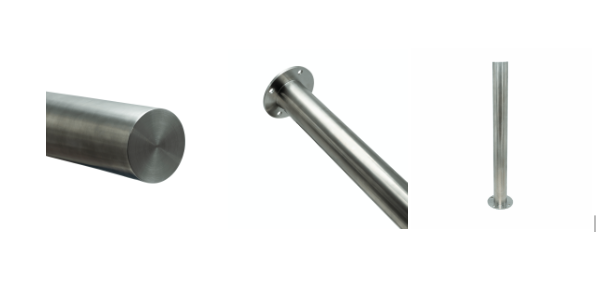
The Bollard Surface Mount Satin Finish AISI304 is a strong starting point for most residential and light-commercial jobs. It’s manufactured from 304-grade stainless steel with a clean satin finish, sized at 900mm high and 170mm wide, with a solid base plate for surface fixing. It suits boundary marking, asset protection, and access control around driveways, entries, and car parks.
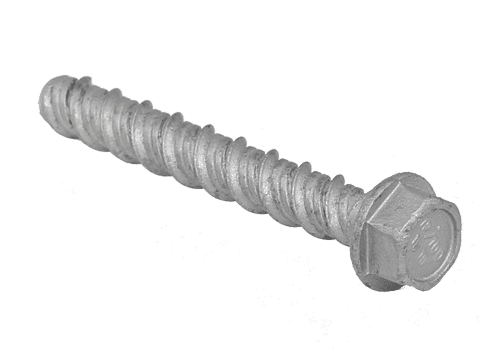
For the fixing itself, pair it with the Screwbolt 10 x 100mm Galvanised. Galvanised screwbolts give a strong mechanical fix into concrete without the corrosion risk that comes with untreated fasteners, which matters over the bollard’s full working life, not just at handover.
Installation Benefits
Choosing a matched bollard and fastener system from one supplier cuts down on guesswork:
Consistent grade and finish across bollards, posts, and handrail hardware on the same site.
Faster specification for architects and builders, since dimensions and load data are published upfront.
Fewer callbacks, because correctly graded stainless and galvanised fixings don’t corrode, loosen, or stain surrounding paving.
Trade support for larger jobs, including bulk pricing and technical guidance on fixing methods for different ground conditions.
For full technical specifications, fixing patterns, and related hardware, browse the Miami Stainless catalogue and resources hub before you finalise a quote.
Get the Right Bollards for Your Site — Fast
Don’t leave boundary protection to a last-minute hardware store run. Miami Stainless stocks bollards, screwbolts, and matching stainless fittings ready for same-day dispatch, backed by a technical team that actually understands fixing and grade selection. On most enquiries, the team’s first recommendation is the same pairing covered above: the Bollard Surface Mount Satin Finish AISI304 fixed with a Screwbolt 10 x 100mm Galvanised.
Request a quote today, browse the bollard and hardware range online, or call the team directly for trade pricing on multi-site orders. Stock moves quickly on popular sizes, so get your order in before your next site delivery.
Wrapping Up
Bollards are a small item with an outsized job: protecting property, guiding traffic, and holding their finish through years of Australian weather. Getting the grade, fixing, and finish right the first time saves rework and keeps a site looking sharp long after handover.
Miami Stainless supplies the bollards, fasteners, and stainless steel hardware Australian builders and homeowners rely on, all backed by local stock and real technical support.
Ready to protect your property with bollards that actually last? Shop the Bollard Surface Mount Satin Finish AISI304 and matching galvanised screwbolts online now, or speak with the Miami Stainless team for trade pricing and technical advice. Same-day dispatch is available on in-stock hardware requesting your quote today before your next site delivery.
Frequently Asked Questions
What grade of stainless steel is best for bollards in Australia? The cleanest and most affordable option is AISI 304.
Do bollards need council approval in Australia? You need to verify with your local authority if your project involves installing bollards to the public or street side of your property.
What fasteners should I use to install stainless steel bollards? A Screwbolt 10 x 100mm Galvanised is one good way to fix such bollards securely to a concrete surface that has adequate structural integrity.
How far apart should bollards be spaced? Bollard spacing varies in accordance with the site, vehicle use and the extent of protection needed.